Welcome to another edition of Field Notes! In this month’s newsletter, we’re featuring a trip report from a recent visit to Honduras, plus some great coffees available now and updates on July 4th closures.
Notes From a Visit to Honduras
In May, I traveled to Honduras to visit producer partners, review current crop quality, and better understand the conditions shaping this year’s availability. The trip included field visits, cupping sessions, conversations with exporters, and meetings with producers focused on both quality improvement and long-term supply reliability. We arrived near the end of harvest, which gave us the opportunity to cup more rested coffees, review potential lot selections, and see how the supply chain is positioned for the 2026/27 crop.
Honduras has long been a reliable source of high-grown Central American coffees, and its role continues to expand. Today, it offers clean and versatile regional lots, good volumes of cooperative and traceable producer group fully certified coffees, , and an increasing range of differentiated single-producer, variety-specific, and special-process offerings.
Much of this trip focused on Café Raga, led by Rony Gomez and his team. Café Raga’s strength is its position between small producers and specialty buyers. Their work includes producer support, lot separation, quality evaluation, dry milling coordination, and export preparation. They are not simply buying coffee and moving it along; they are helping organize producers, provide feedback, improve preparation, and create a more dependable path from farm to buyer. That role is especially important in regions where many producers are small, remote, and limited by infrastructure.
Many of the producer groups in this part of Honduras are not formal cooperatives, but they function in a similar way. Small farmers band together through family ties, geography, shared transportation, or practical selling needs. They may keep very small microlots separate while combining other coffees into larger regional or group lots. In this context, a “regional lot” does not necessarily mean anonymous coffee. These lots are built from known producer groups, with enough volume to support repeatable buying programs while still maintaining a meaningful connection to these producers and their distinct regions.
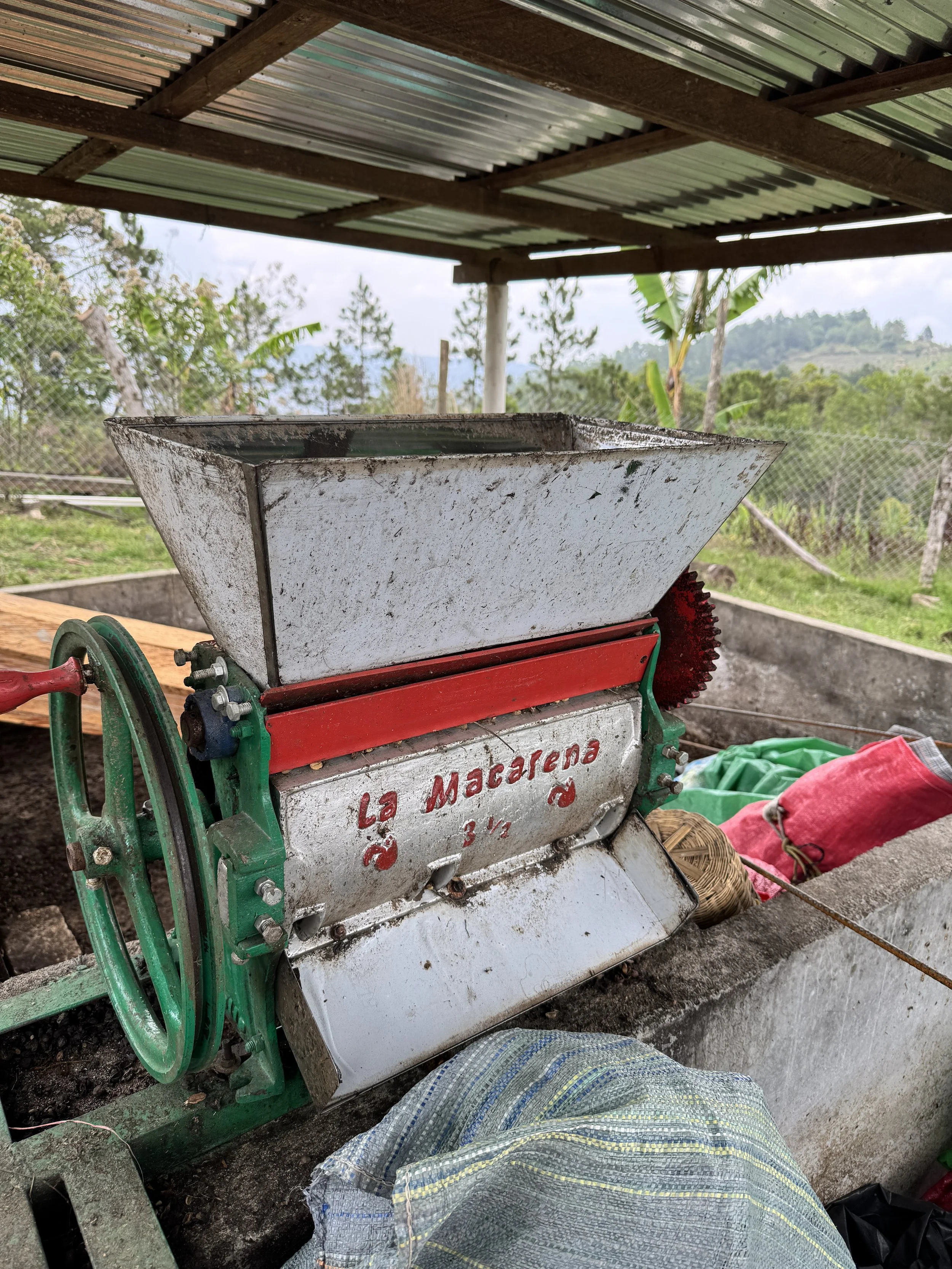
Depulper in Agua Fria zone
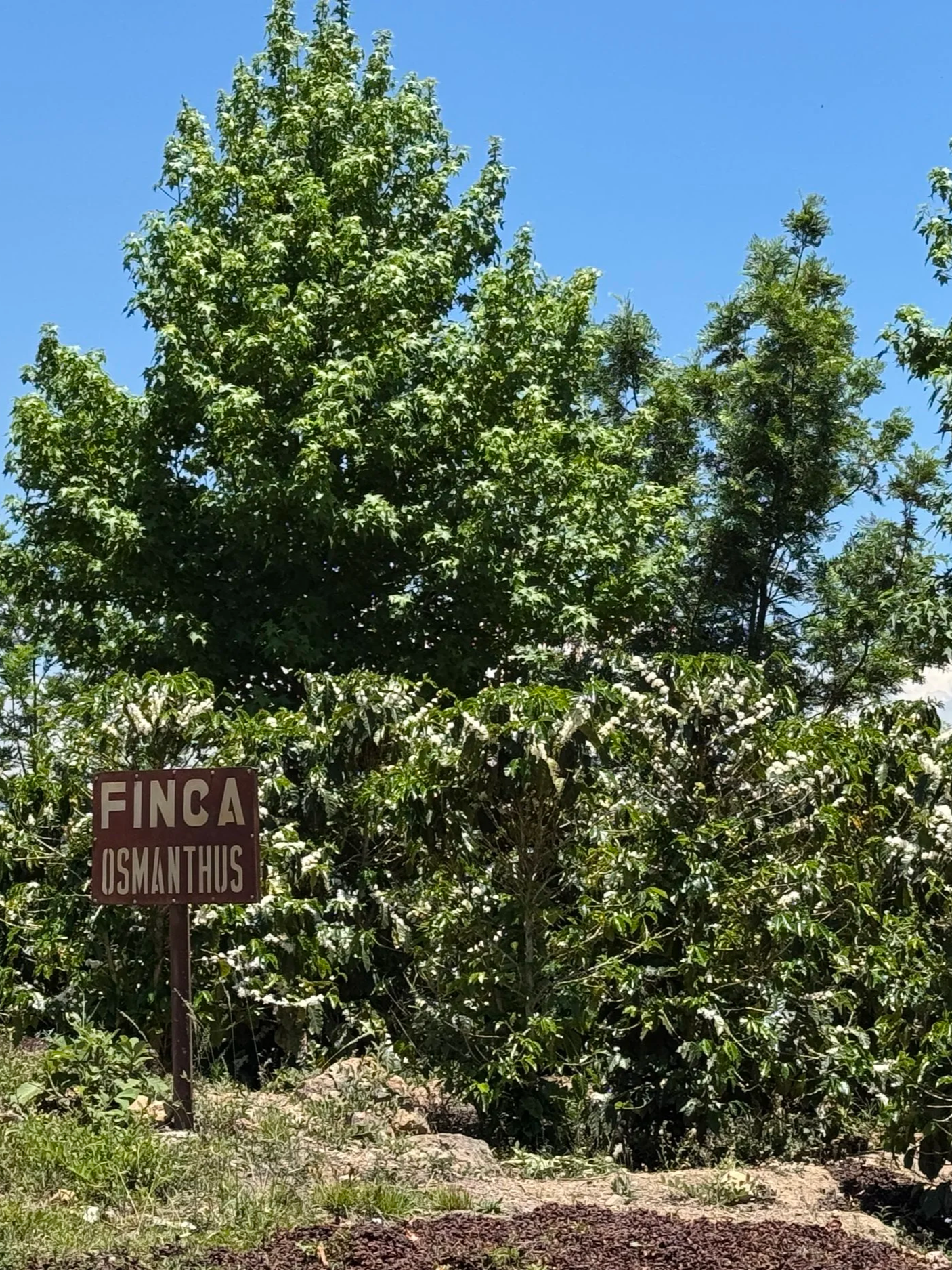
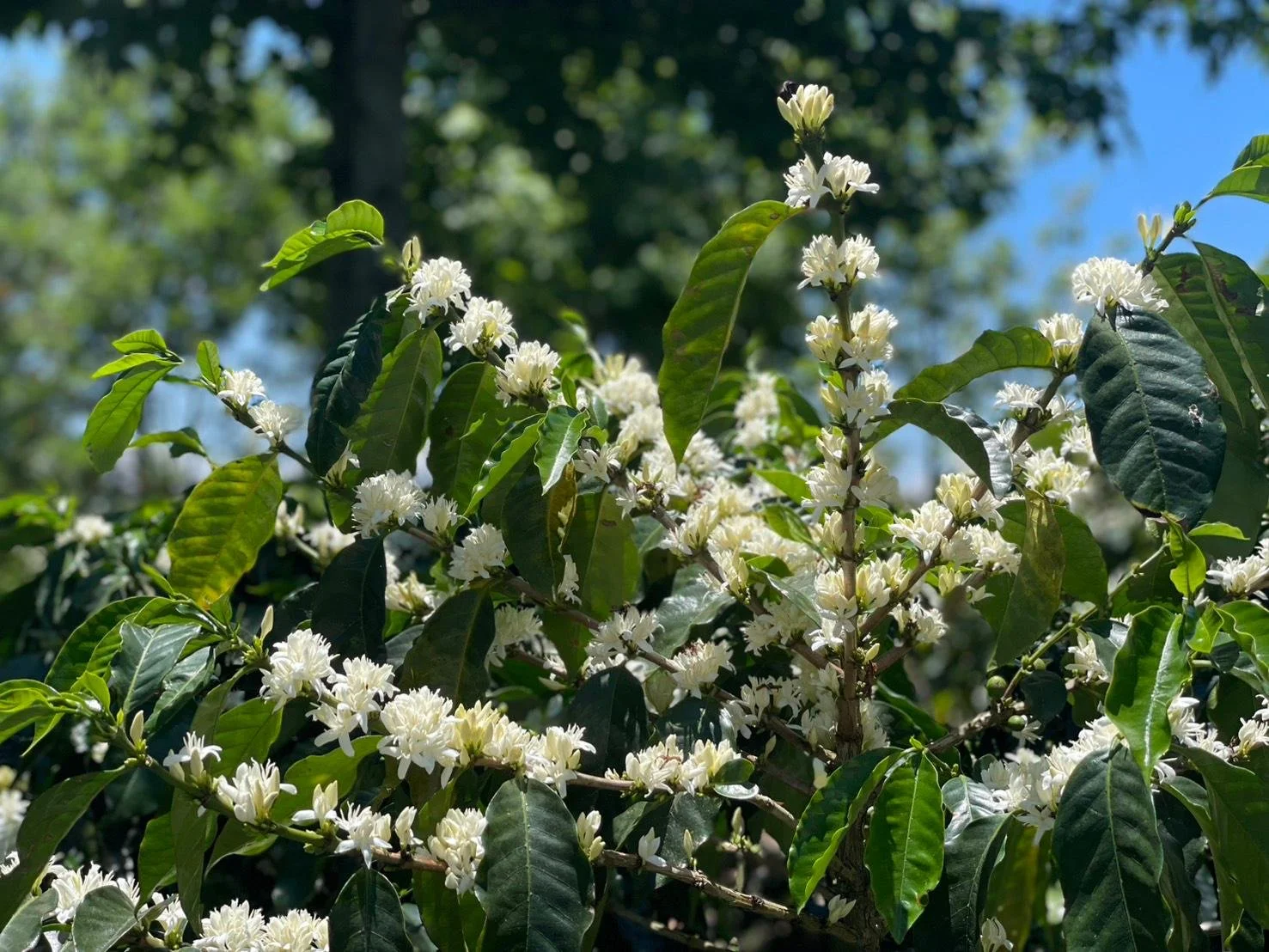
Big flowering at Finca Osmanthus
The quality control system is also more layered than it may appear from the outside. Coffees in Café Raga’s supply chain are evaluated after drying, again when delivered to a local warehouse, and again before dry milling and export. That repeated screening helps explain why their best regional lots were clean and consistent, even when they came from multiple small producers.
At Café Raga we cupped a wide range of coffees. Many of the regional lots were exactly what we hope to find from Honduras: balanced and well prepared with good sweetness. The stronger lots showed approachable Central American profiles, with notes that leaned toward panela, citrus, apple, cocoa, and mild stone fruit. The smaller and more distinctive lots showed a wider range, including deeper fruit tones, floral qualities, and more process-driven complexity.
Our countryside visits included time with the Erandique producer group, led by Esdras Ayala, along with other Café Raga-affiliated producers. The groups we visited all appeared healthy and well organized. Several described careful expansion plans, adding new members gradually rather than growing too quickly. With Café Raga’s leadership and field support, this kind of measured growth can help increase volume while protecting quality and maintaining trust.
In Erandique, we also had the chance to visit the local school, run by Esdras’ wife Lesvia Castellanos. Students ranging from about five to eighteen welcomed us with prepared presentations in Spanish, English, and even a little Japanese. They were clearly nervous, but also curious, proud, and eager to engage with visitors from the United States and Japan.
It was a reminder that coffee sourcing is connected to entire communities, not only farms and mills. Many of these students are the children of coffee producers, and they represent the future of the town. Their welcome was thoughtful and sincere, and for me it became one of the most memorable moments of the trip.
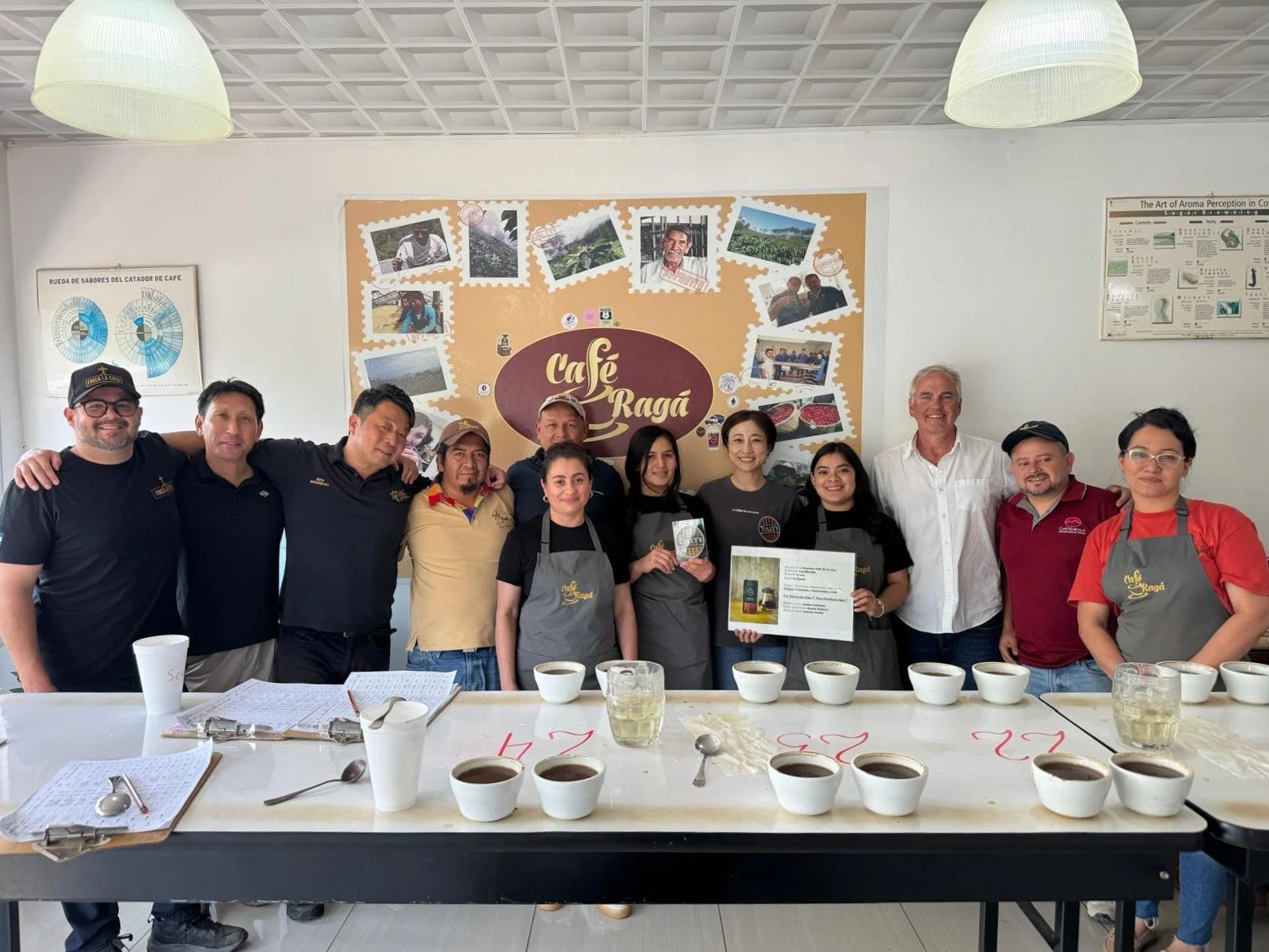
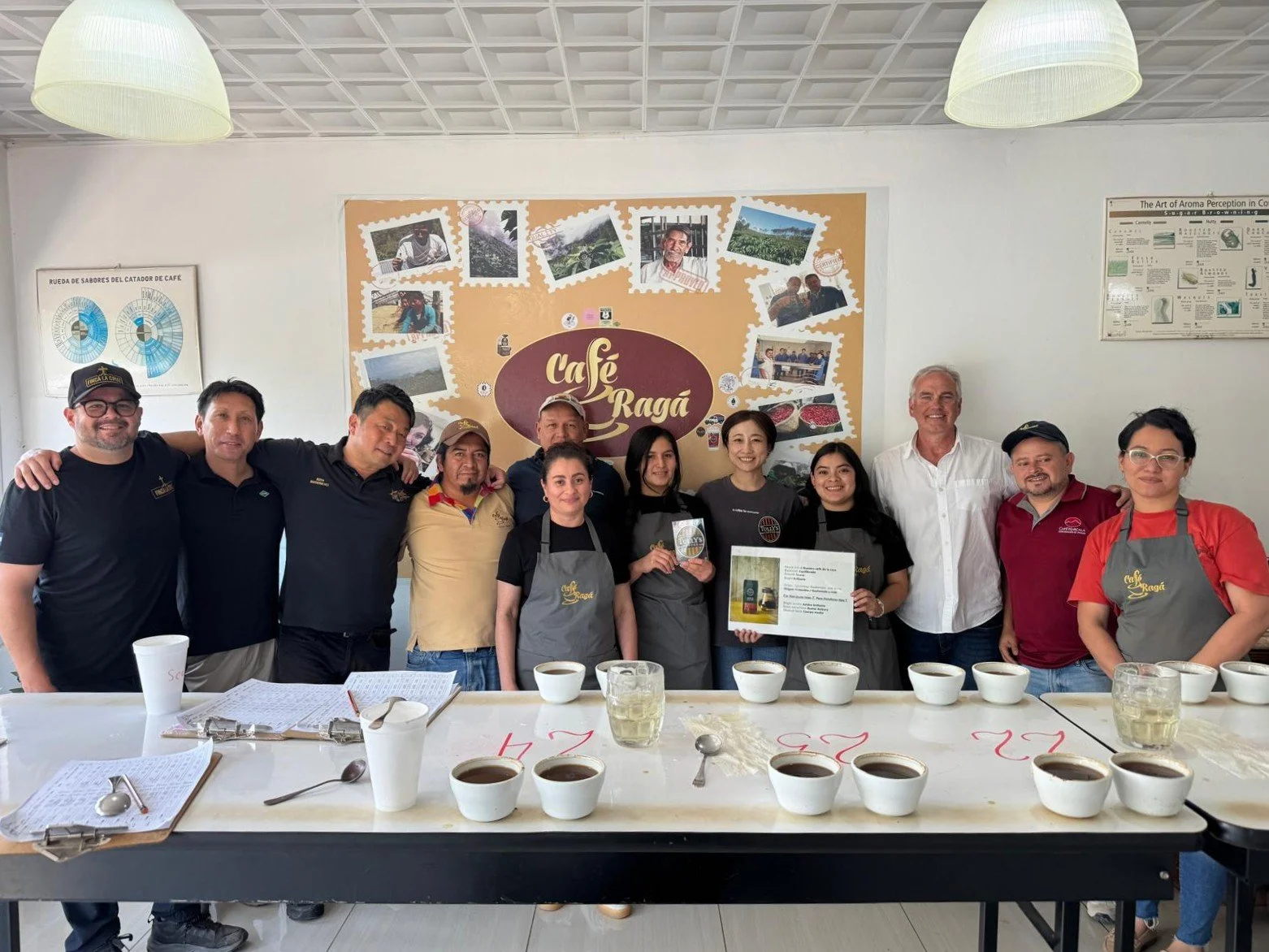
Cupping at Café Raga in Marcala
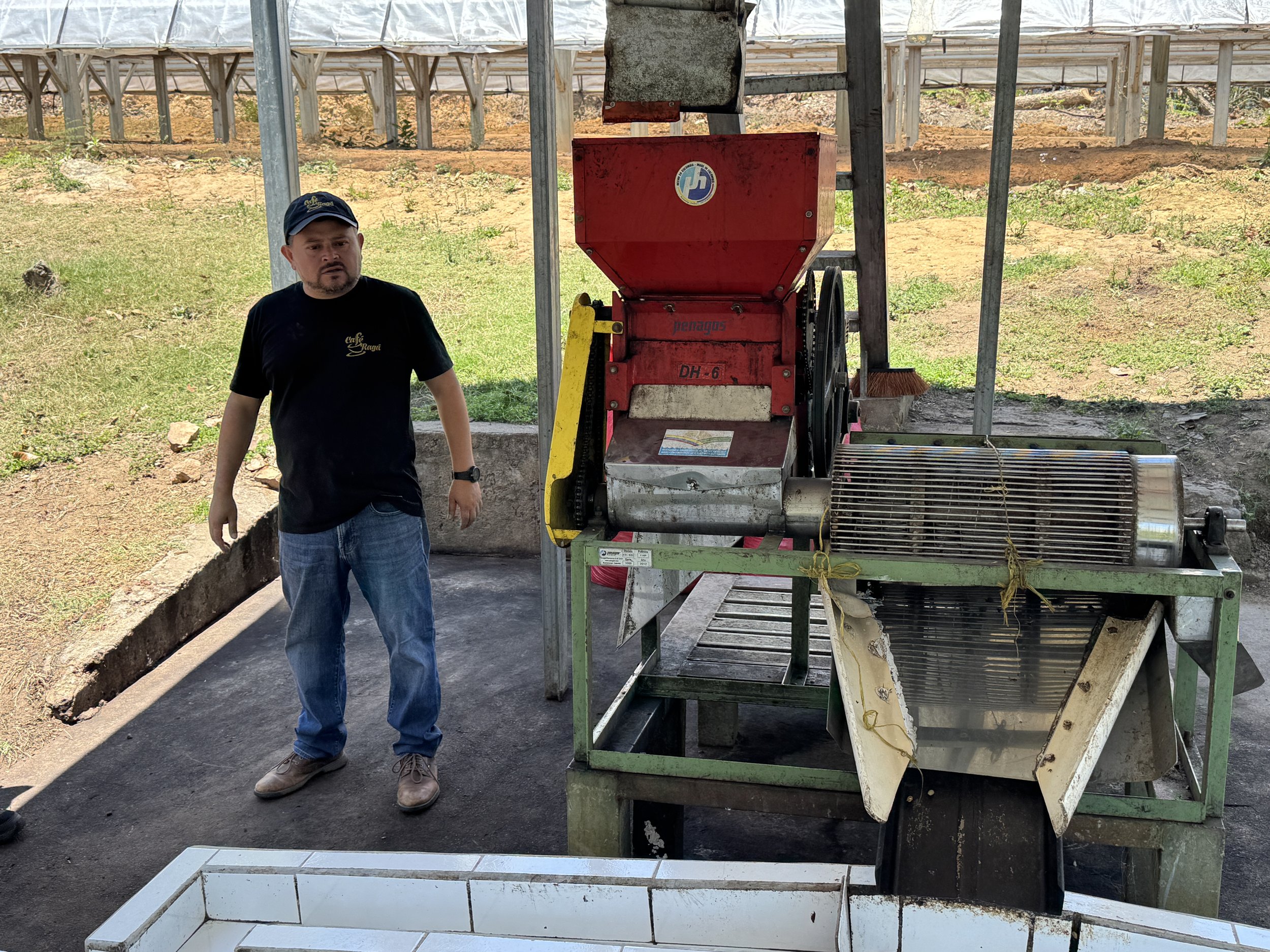
Rony and the small beneficio at El Kukurucho
Rony’s model depends on continued support from buyers who are willing to pay fair prices, especially as market and local conditions come off recent highs. He works on a flat-price model, and the pricing we discussed seemed appropriate for high-quality Central American coffees: above commercial levels, below the highest-priced Tarrazú or Huehuetenango lots, with selected microlots priced only moderately higher. In that context, the pricing did not feel excessive. The more important point is consistency. These producer groups benefit from repeat purchases and from the stability that a committed customer base can provide year after year.
There are also real challenges. Honduras continues to increase volume across multiple channels, but weather remains unpredictable, and the next crop cycle will depend heavily on conditions following flowering. 2026’s El Nino will have an impact here. Labor is also becoming more difficult as the pool of reliable workers shrinks. In that environment, the Café Raga model offers producers more stability and certainty than commercial or coyote-driven buying channels. That model is worth supporting, but it also requires patience and flexibility from buyers.
We are currently planning purchases for this year, but the final list remains a moving target as prior commitments, sample availability, and lot allocations continue to shift. As of now, I am planning for approximately 100 bags each of two separate regional lots, along with a selection of smaller single-producer or variety-specific lots. If the right coffees are available, we may also add a few special microlots as highlights.
The goal is to align on final selections soon, with a possible July shipment and warehouse arrival by September. Once availability, cup notes, and pricing are clearer, we will put together a more complete offer list.
This was a fruitful relationship building trip. I remain impressed by the potential in Honduras and look forward to building up our offerings each year.
Report by Scott Merle, Senior VP Green Coffee Sales
Available Now
COSTA RICA, DOÑA ISA BENEFICIO RIO TARRAZÚ
Returning for its second year, Doña Isa Beneficio Rio Tarrazú is our trademarked coffee from women producers in Costa Rica’s Los Santos region. We work with a select group of producers, paying additional premiums to support sustainable farming practices, social initiatives, and mentorship. This coffee has become a favorite for many of our customers, and we expect it to move quickly!
Availability: CTI NJ
Certifications: N/A
Cupping notes: Apple, milk chocolate, caramel
COSTA RICA, HACIENDA RIO NEGRO NATURAL
Our team at Rio Negro has been experimenting with a naturally-processed preparation for several years, and this year it’s making its debut on our offer sheet. We’ve found that the farm’s profile lends itself very well to this process, and we’re excited to share it with you. Expect a fruit-forward and intense cup balanced with the sweet, chocolate notes that Rio Negro is known for.
Availability: CTI NJ
Certifications: N/A
Cupping notes: Blueberry, raspberry jam, dark chocolate
JULY 4TH WAREHOUSE CLOSURES
La Minita’s office will be closed on Friday, July 3rd in observance of Independence Day. Our warehouse partners will also be closed for the holiday, which may cause minor delays in shipping times for orders submitted earlier in the week.
That’s all for this month’s edition. Thanks for reading, and as always, if there’s anything we can do for you, reach out to your salesperson or fill out our contact form and we’ll get right back to you. See you next month!