
Welcome to another edition of Field Notes! In this month’s newsletter, we’re featuring a trip report from Papua New Guinea plus some great coffees available now!
Notes From a Visit to Papua New Guinea
In May, Russ and I visited Papua New Guinea. It was our first visit, and our goal was to visit new suppliers, develop relationships and better understand the country’s coffees. Our trip took us from Los Angeles to Sydney with a 24-hour layover, and then on to Port Moresby, PNG. From there, we flew to Goroka in the Eastern Highlands. We overnighted at a hotel in Goroka and left early the next morning for a three-hour drive to meet a supplier in Kainantu. We drove past many people along the side of the road, some of whom were holding bows and arrows and machetes.
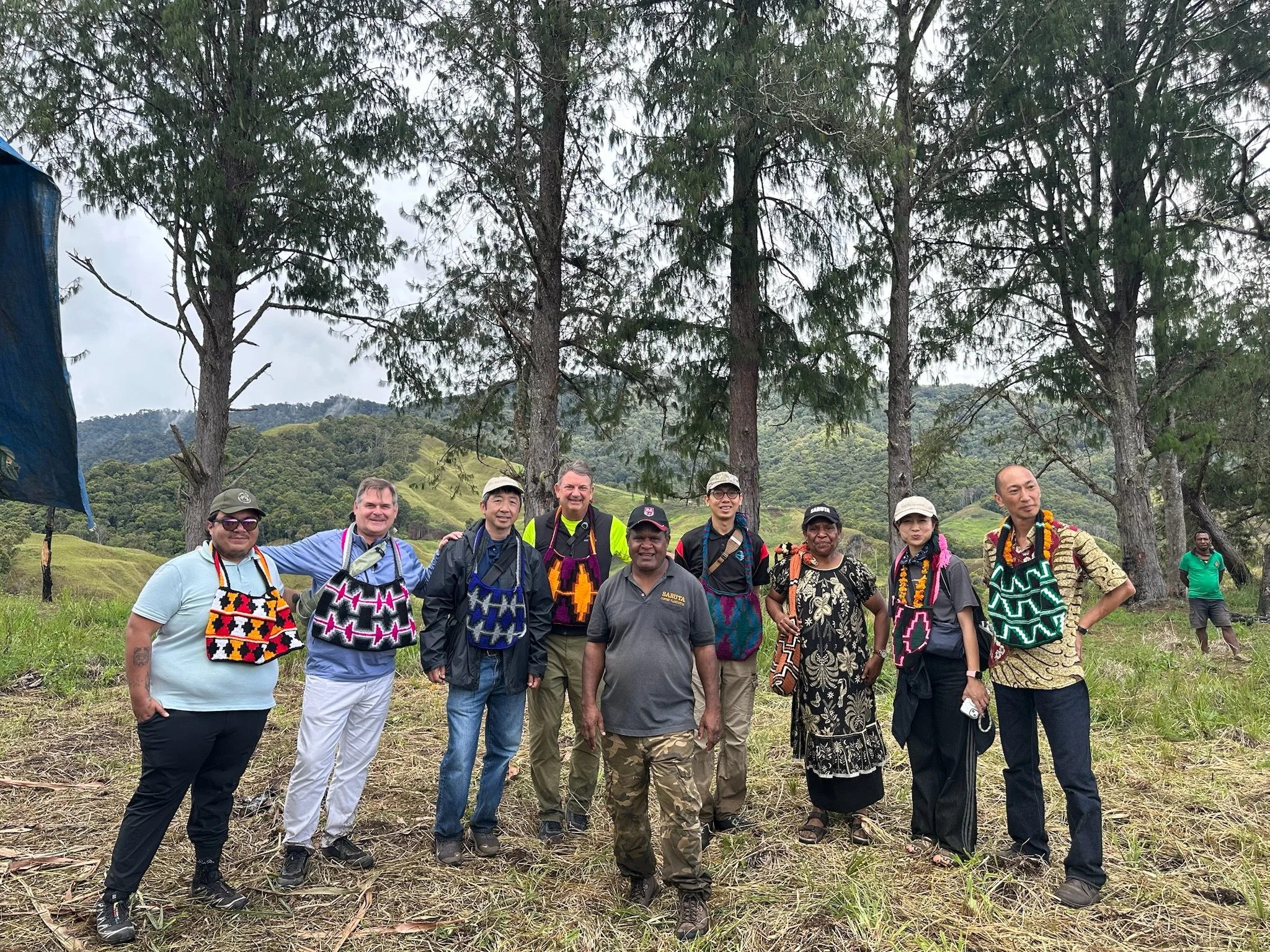
From Kainantu, in the Obits region, we drove to the producer’s farm, Saruta. Jeffrey and Eva Usake started the farm in 1985 and have 60 hectares total, with 34 hectares in production. They grow multiple varietals and produce over 1,300 60kg bags of coffee annually. They also buy coffee from other producers in the area.
We had an amazing lunch with a spread of fresh vegetables, goat and chicken. Afterwards we walked down the hill to a welcoming ceremony held by the people living in the surrounding villages. Getting out of the area was quite interesting as it had rained. We had to cross a small river and immediately drive up a muddy hill, and our trucks were getting stuck. After a little maneuvering and with some assistance from the locals, all the vehicles made it through the river and up the hill. We then drove back on the same road with a police escort. We finally made it back to the hotel for the evening.
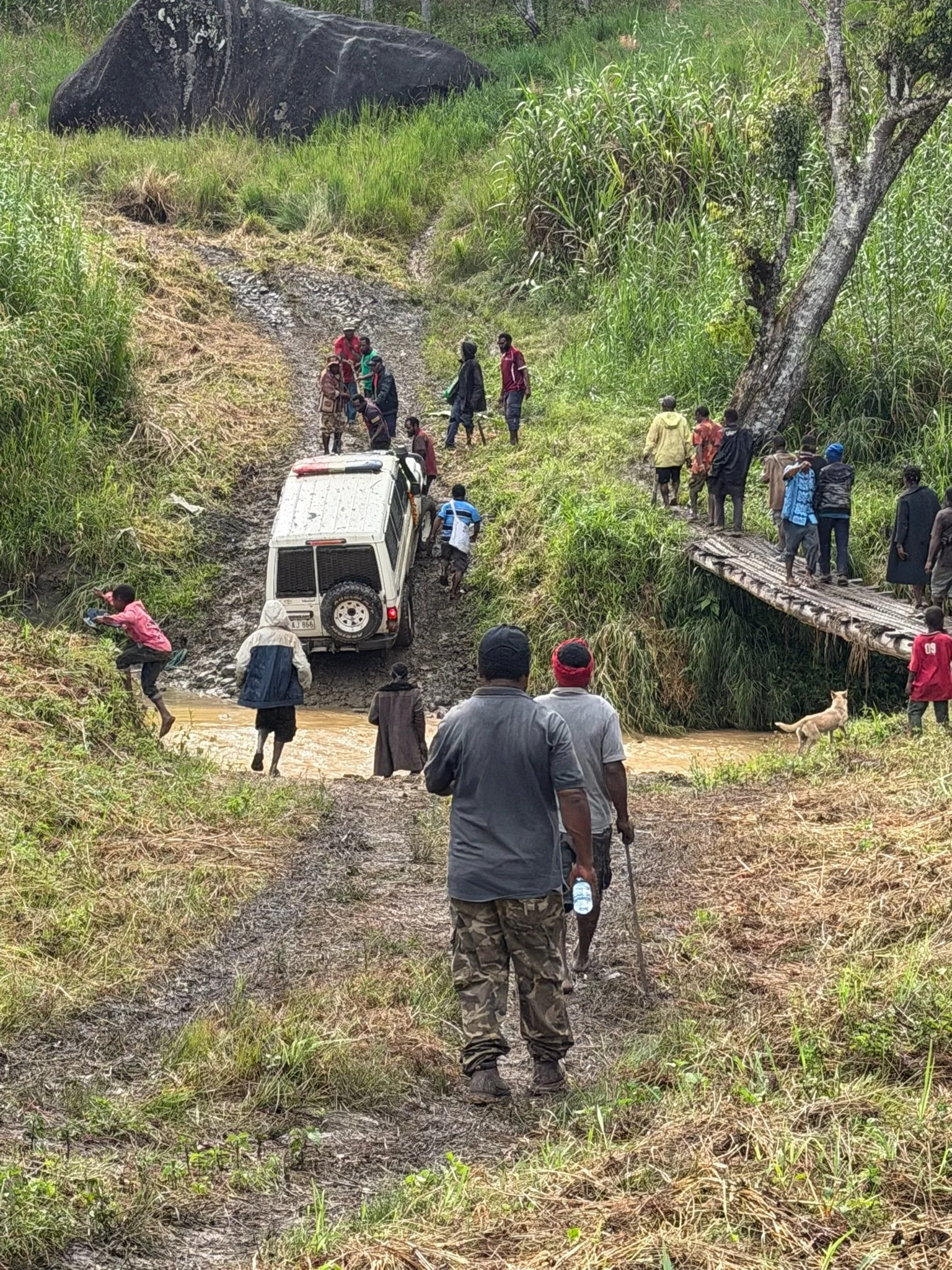
Navigating a river crossing with help from locals
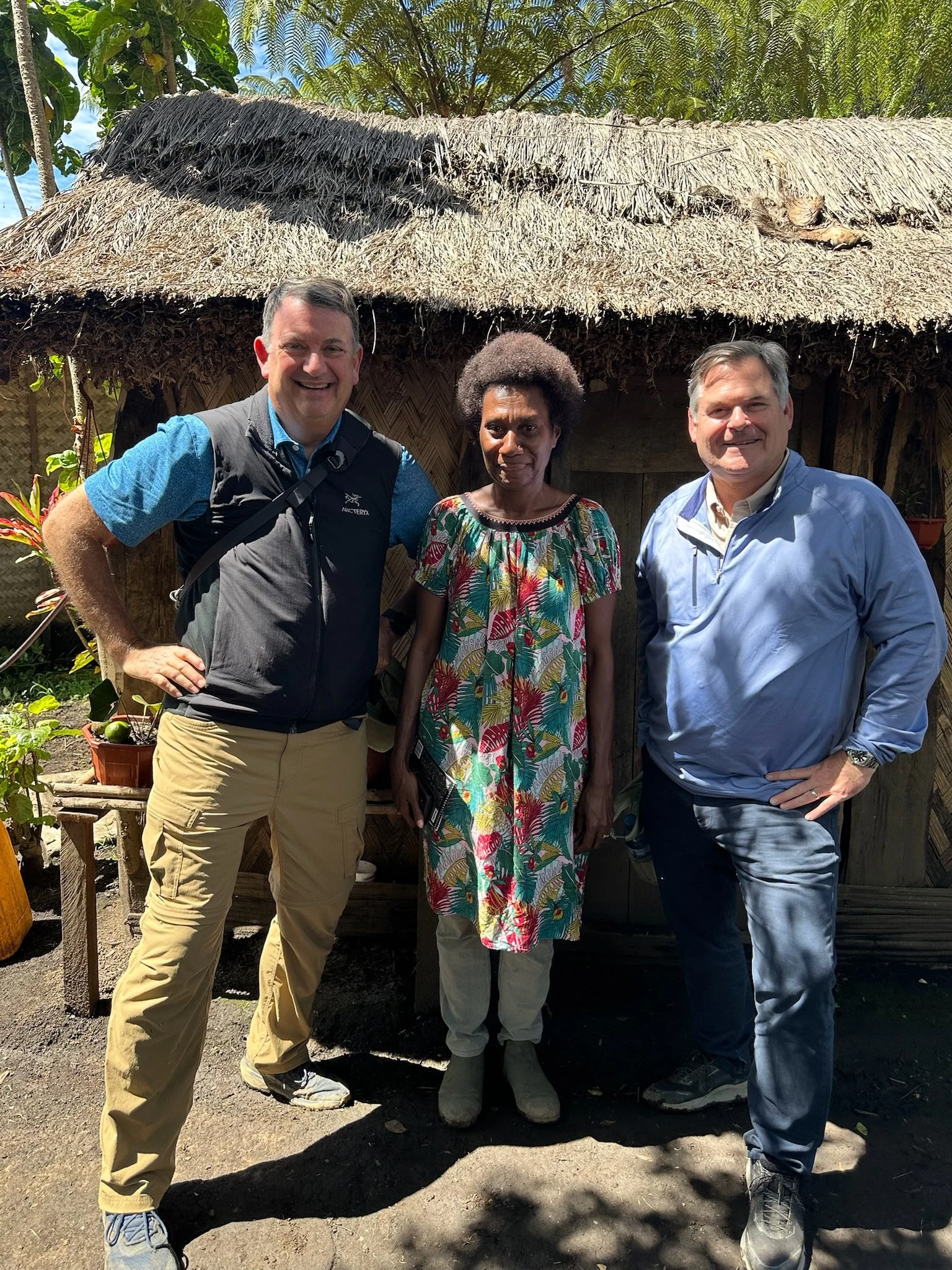
Russ and Drew with Rhonda of Asaro Valley Coffee
The next day we left to visit two different producers closer to Goroka. The first was Asaro Valley coffee, where we were greeted by warriors in clay masks and bodies covered with clay. It was explained to us that this ceremony was to protect the area between the two rivers from outside spirits. Rhonda is the main farmer at Asaro Valley, along with her father Steven who planted the farm around 60 years ago. They buy coffee from local farmers and produce some themselves. Located at 1,630 meters above sea level, their farm is mostly Mundo Novo, with some Blue Mountain as well as a few other varietals. They do not use herbicides, and in one area used peanuts as their ground cover instead. In 2020, they built a wet mill, and they gave us a tour and demonstrated their processing method. The mill was very impressive for the area, with a depulper, washing channel, and fermentation tanks.
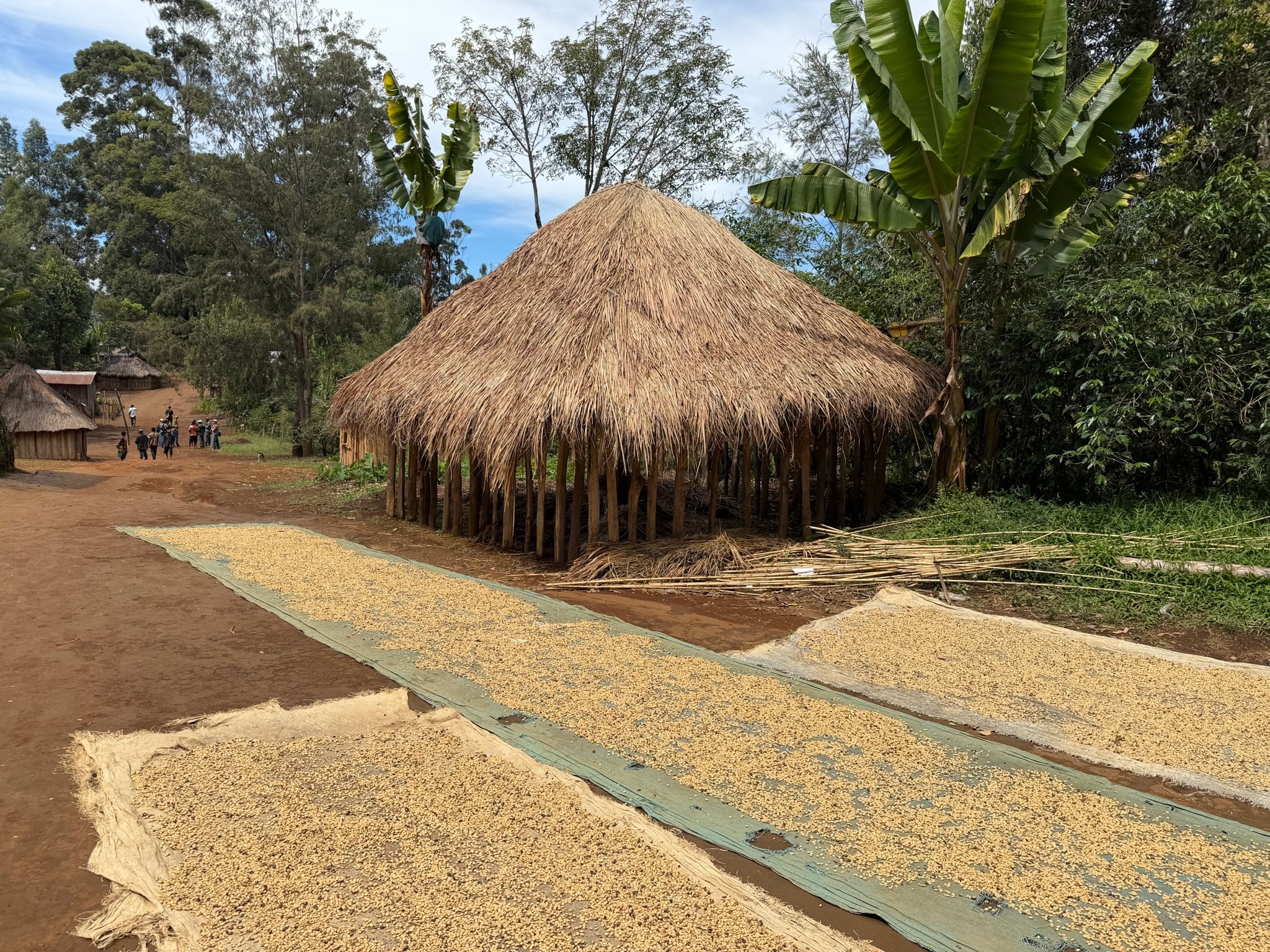
Our next stop was about an hour’s drive to a cooperative in Azure where we met with members of the cooperative and its director. There are 103 farms spread between the three villages located in the area, and they obtain some funding from the UN. When we arrived, we were greeted by producers from the Miruma village. The village was at around 1,880 meters above sea level, and was mostly planted during the late 1990’s. They had running water in parts of the village and each hut had a very small solar battery to run small lights or charge cell phones.
We spent the next day at our host’s dry mill, Monpi. We toured the storage and finishing areas and then had a cupping. The most interesting portion was the hand-cleaning area, located outside behind the dry mill. I would say there were 150 women working, and they each hand-cleaned about 100kg of coffee per day. On the cupping table were coffees from each of the areas we visited, plus a few others from nearby. We bought the standout coffees: Marawaka and the coffee from Rhonda. Both coffees should land in the U.S. in November.
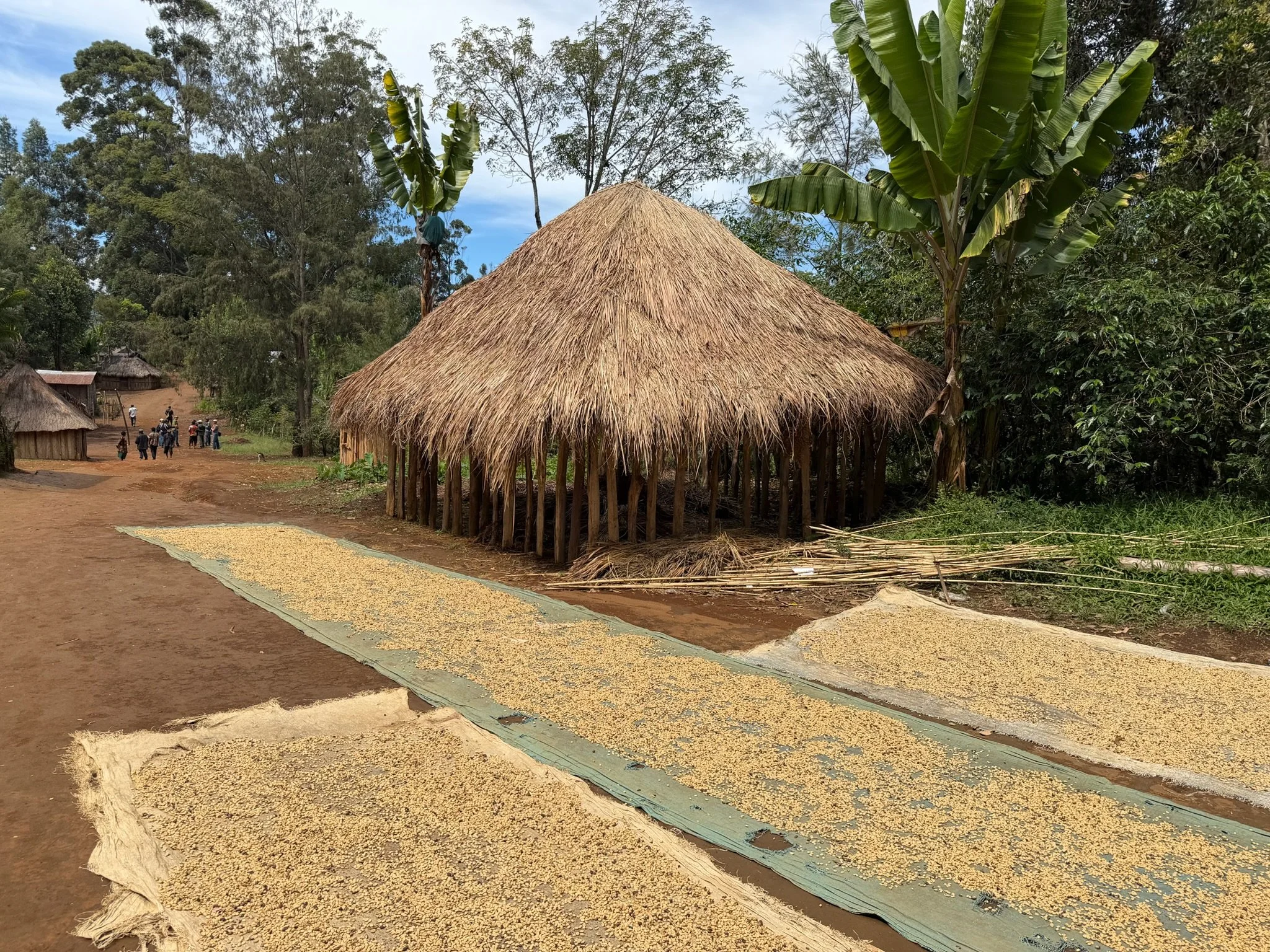
Coffee drying in the Miruma village
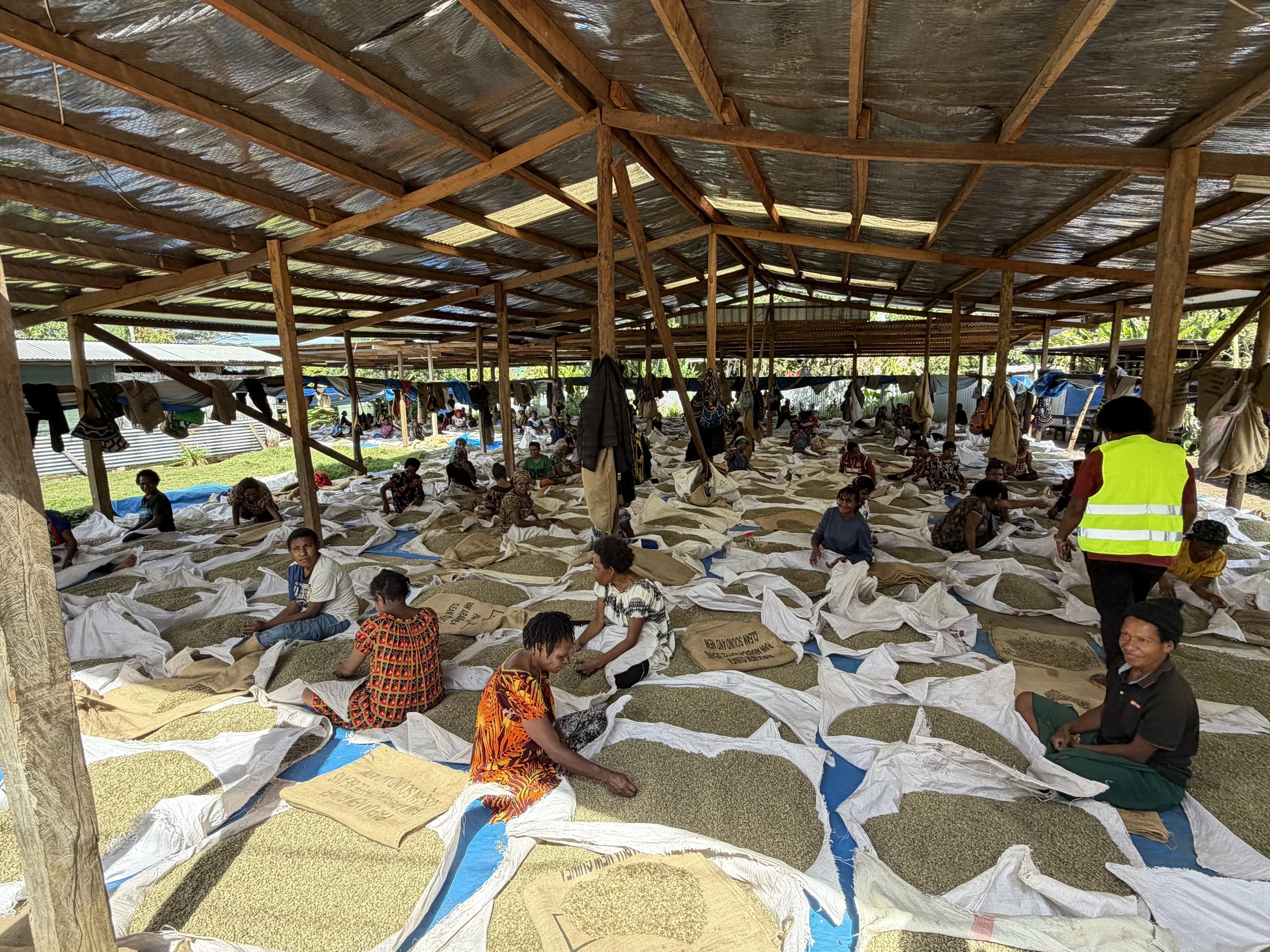
The hand-cleaning area at the Monpi dry mill
Papua New Guinea is highly influenced by Australia. After the cupping we had dinner at a hotel and watched the Australian Rugby match between New South Wales and Queensland. It seemed like life was on hold to watch this match.
The next morning, Russ and I took a four-hour drive from Goroka to Mount Hagen and visited Carpenter Estates. Carpenter Estates is comprised of five estates planted in in the 1960’s and 1970’s. The larger estates are Bunom Wo and Sigri. In total, the farms are 1,300 hectares, and they contain two wet mills and two dry mills. The farm is picked by hand and the coffee is delivered to a wet mill. After wet milling, the coffee is delivered to a new state-of-the-art dry milling facility. After our tour, we cupped five different coffees from the Sigri Estate. We then returned to our hotel for the evening.
That night we experienced what I learned is standard for Papua New Guinea: flight delays and cancellations. Our flight the next morning returning to Port Moresby was delayed, and we would miss our connection to Sydney. I was able to change the flight to a different airline, but thisflight was also considerably delayed. Once we arrived in Port Moresby, we had to run through the airport and were the last ones on our flight to Sydney. Nothing is ever dull.
Papua New Guinea is a beautiful country, and the coffees we tried were clean and very consistent. I am looking forward to my next trip to visit another part of the country. This year’s coffees are available now for forward bookings and should begin arriving in October.
Report by Drew Zent, Senior Manager Green Coffee
Available Now
COSTA RICA, DOÑA ISA BENEFICIO RIO TARRAZÚ
Returning for its second year, Doña Isa Beneficio Rio Tarrazú is our trademarked coffee from women producers in Costa Rica’s Los Santos region. We work with a select group of producers, paying additional premiums to support sustainable farming practices, social initiatives, and mentorship.
Availability: CTI NJ
Certifications: N/A
Cupping notes: Apple, milk chocolate, caramel
KENYA, GAKUYUINI AA
We have been purchasing a variety of lots from the Gakuyu-ini factory for many years, and this year’s coffee is as excellent as ever. Located in Kirinyaga County in the foothills of Mount Kenya, Gakatu-ini is the wet mill of the Thirikwa Farmers' Cooperative Society. This cooperative has around 1550 members, with 670 being female farmers.
Availability: CTI NJ
Certifications: N/A
Cupping notes: Chocolate cake, dark fruit, sweet
That’s all for this month’s edition. Thanks for reading, and as always, if there’s anything we can do for you, reach out to your salesperson or fill out our contact form and we’ll get right back to you. See you next month!