
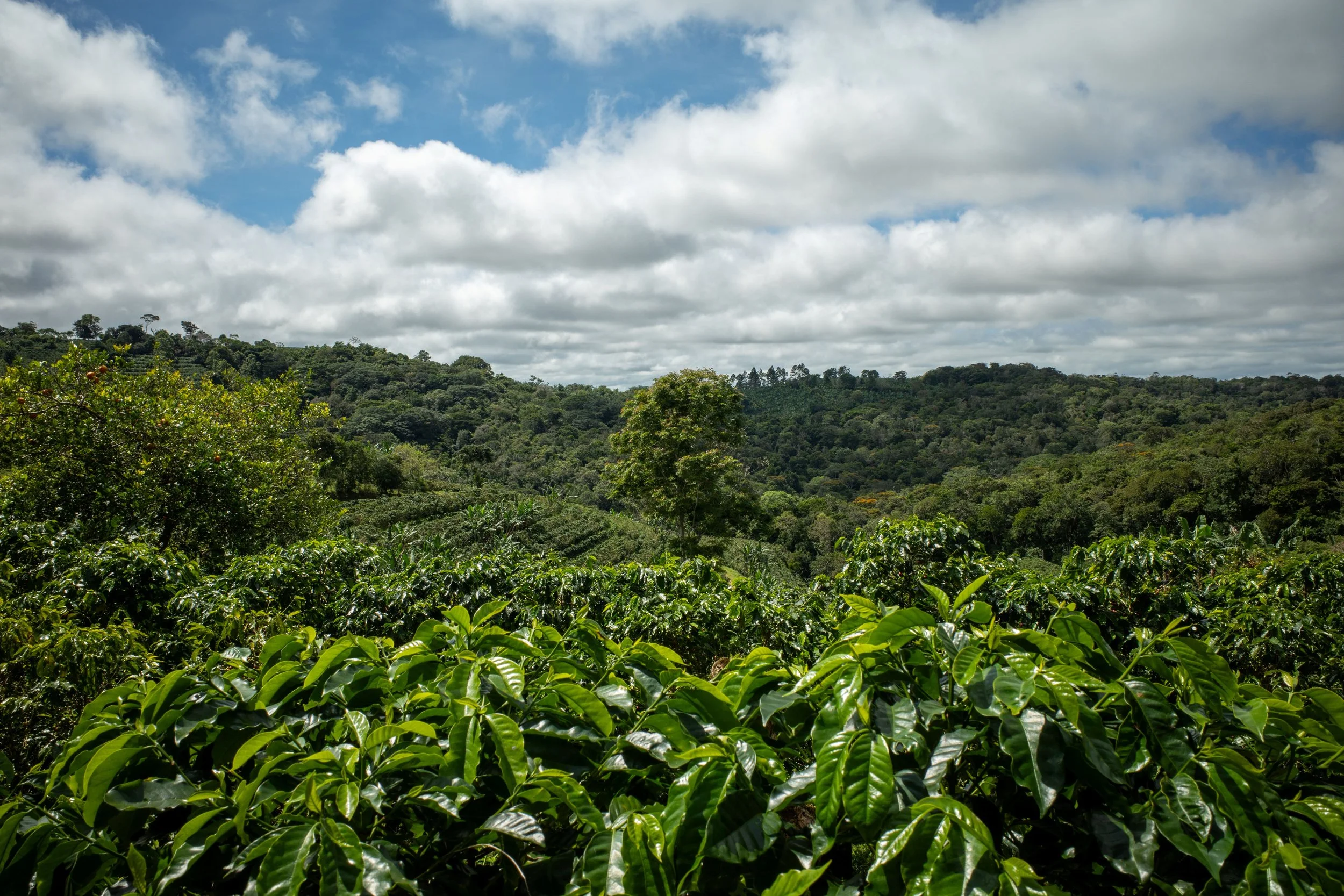
In this month’s newsletter, we’re featuring a visit to Costa Rica, where the harvest is underway at Hacienda Rio Negro. We also have updates about Honduras arrivals and some highlights from our spot inventory!
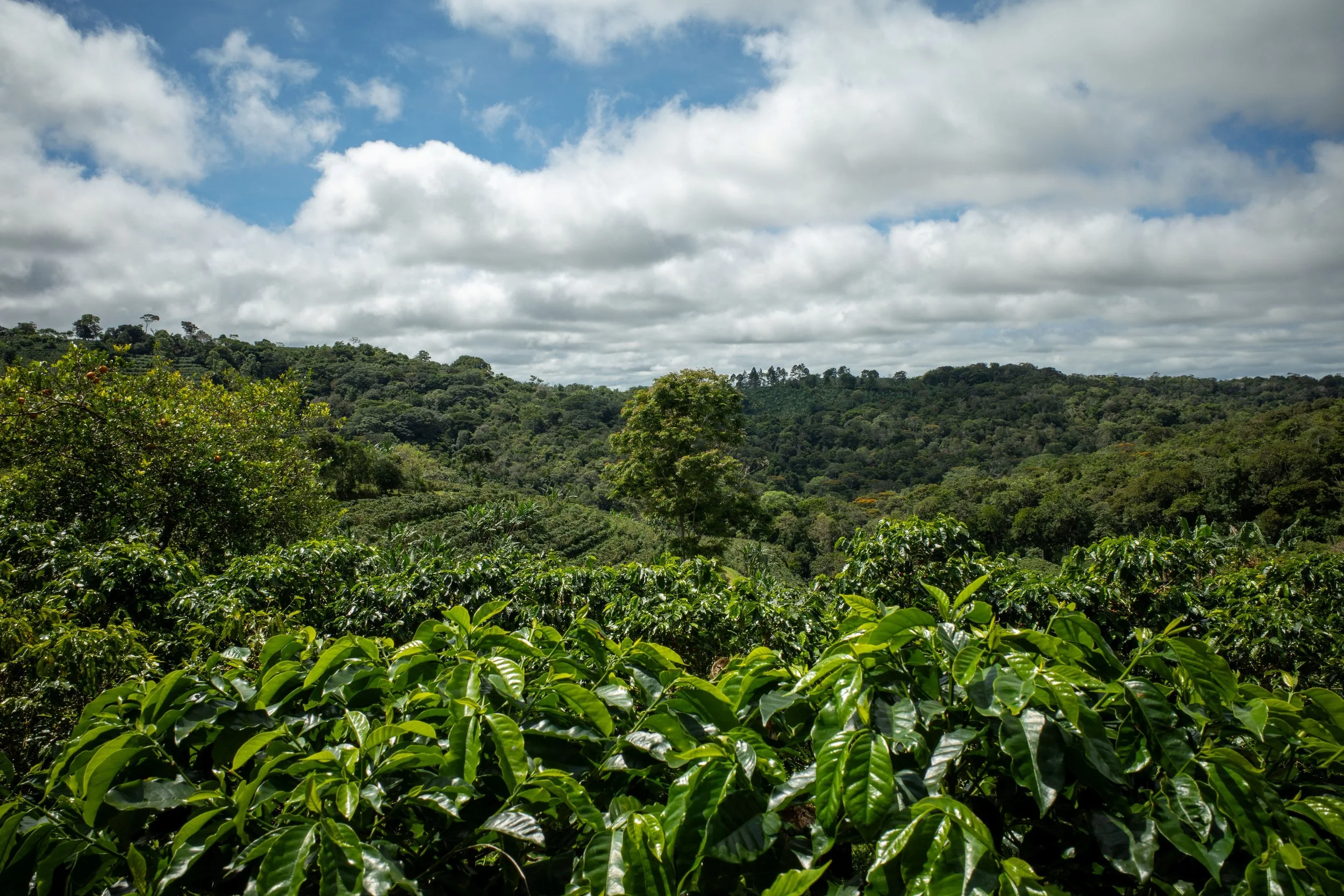
The Harvest Begins at Rio Negro
Last week, I took a trip to Costa Rica to visit our farm Hacienda Rio Negro, where the harvest for the new crop is already underway. This was my fourth year in a row making this trip in October or November, and it’s become something I really look forward to.
Hacienda Rio Negro is located in Coto Brus, the southernmost canton of Costa Rica, near the border with Panama. Getting to this area requires a minimum of six hours of driving from San José, but it’s a worthwhile and often beautiful journey through the southern half of the country. The typical route takes the Pan-American Highway around the Los Santos region and over the ominously named Cerro de La Muerte, winding uphill until you reach the road’s highest point at nearly 11,000 feet above sea level. From there it’s a quick descent into the warm valleys of Pérez Zeledón, followed by a long stretch of low-lying pineapple and sugarcane fields. The road turns gently uphill again to bring you to San Vito, the head city of the Coto Brus canton, and then it’s just another twenty minutes or so until you arrive at the farm gate.
This is the route we took, and after stopping for a late lunch in San Vito, we arrived just in time to see the day’s harvest being delivered to our mill, Beneficio Rio Negro. The peak of the harvest at Rio Negro is still weeks away, but the cherry is already looking excellent, and we have high expectations both in quality and quantity this year.
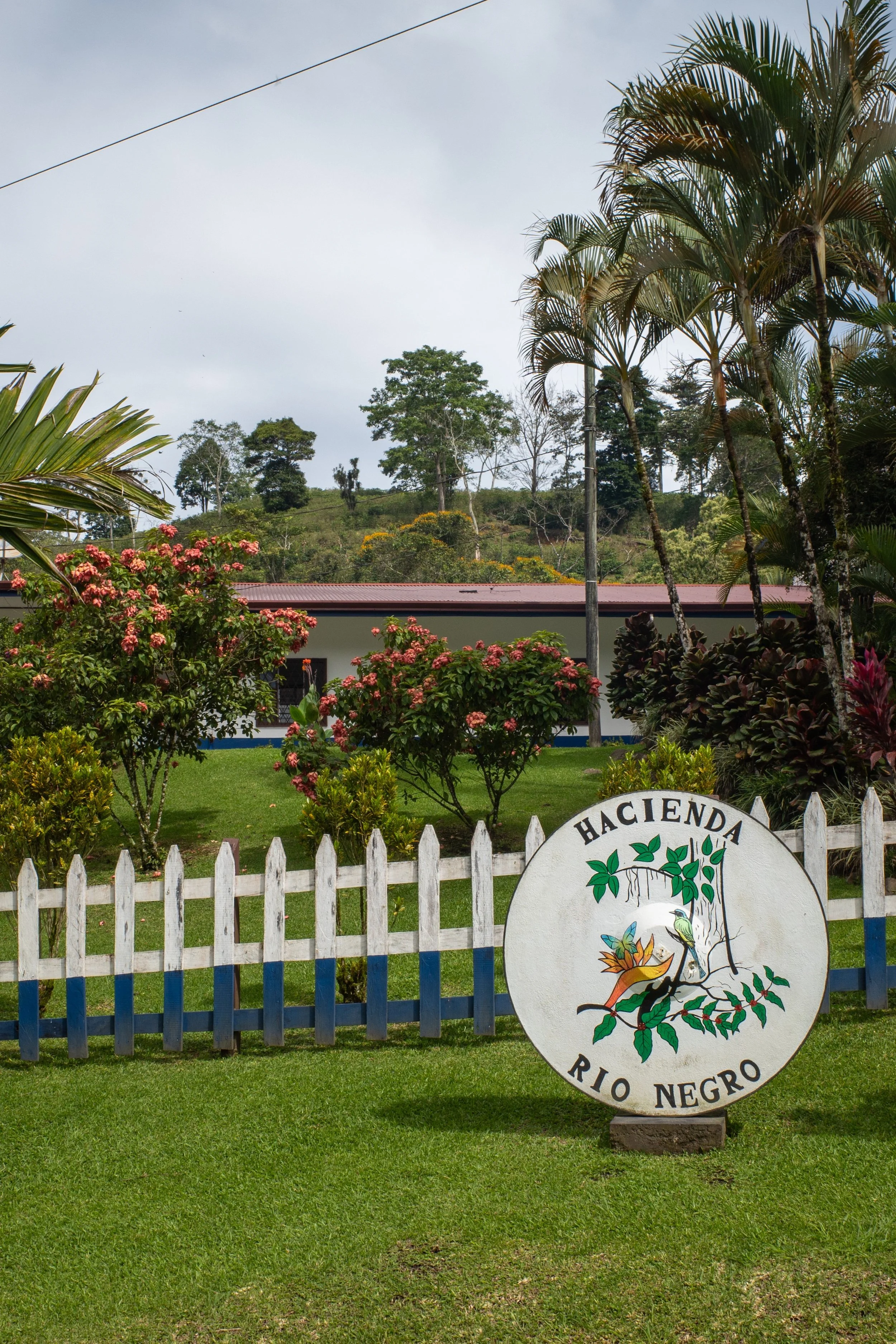
Arriving at the farm’s offices and guest house
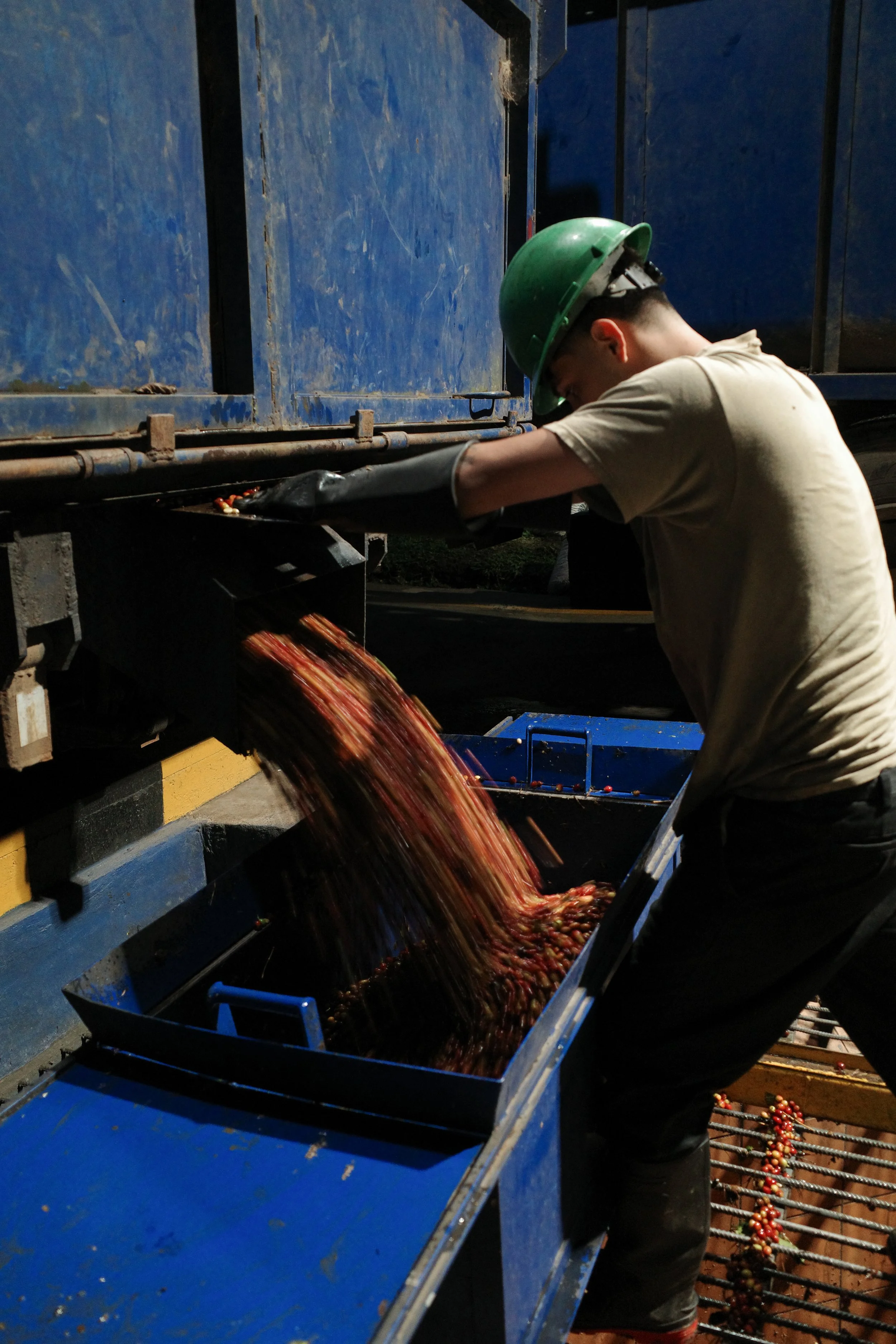
Receiving the day’s harvest at Beneficio Rio Negro
We woke up early the next morning for a full day on the farm. After coffee and breakfast, we hopped into the back of the truck and headed out for a tour. Our first stop was at one of the Casas de Alegría, where we provide meals, learning, and a safe place to play for the children of farm workers during the workday. After that, we drove over to the Tierras Mojadas lot to see the progress of our terraced planting. The goal of this project is to reduce the labor required for weeding and fertilization by creating rows wide enough to be managed by a tractor. The cost of production is increasing steadily in Costa Rica, and creativity is required to keep things as efficient as possible. While this wouldn’t be possible in the steeper terrain of Los Santos, the rolling hills at Rio Negro are well-suited to it, and so far the results are promising.
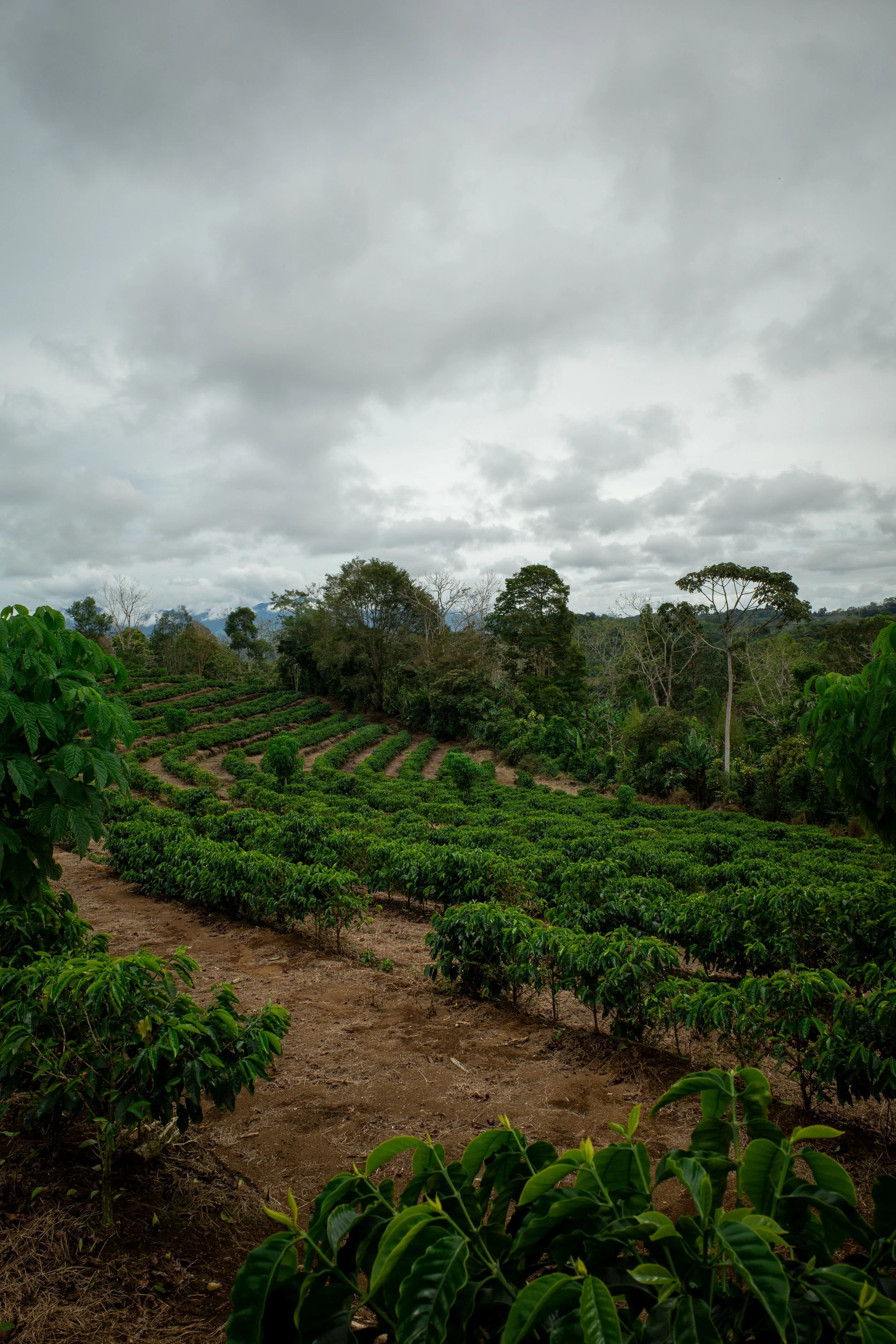
Terraced planting in the Tierras Mojadas lot
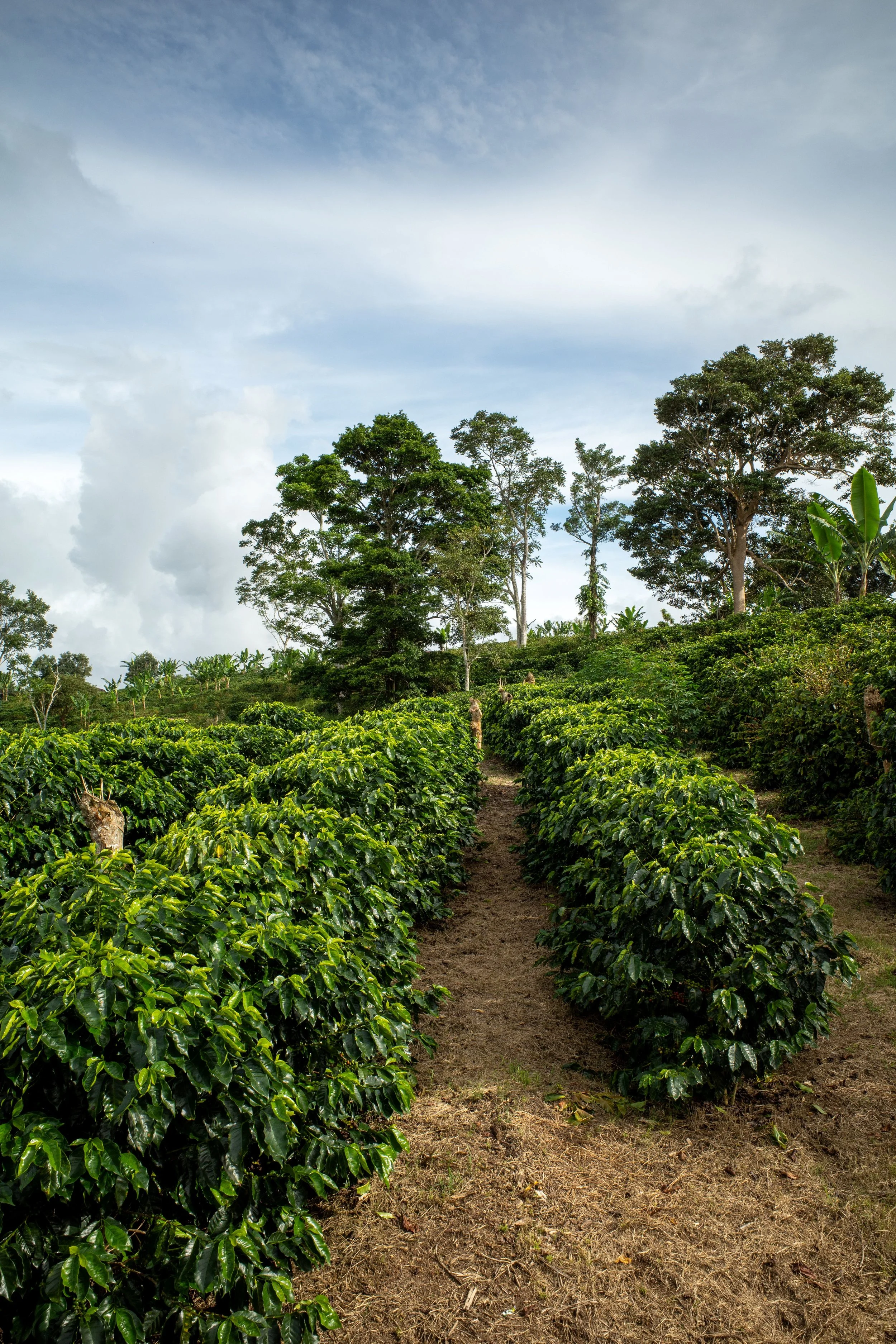
A recently-planted section of Yellow Obata trees
We then made our way to an area where the collection of the day’s picking was in progress, and saw another two truckloads steadily filled with ripe, red cherries. Afterward we made our way to a recently renovated lot which has been planted with the Yellow Obata variety. We’ve been experimenting with this variety at Rio Negro for several years and have been extremely impressed by the quality of the cup, launching it as our first microlot from the farm in 2025. One benefit of Yellow Obata is that it ripens more slowly than the Caturra and Catuai that make up most of the farm, making it easier for us to manage our picking resources.
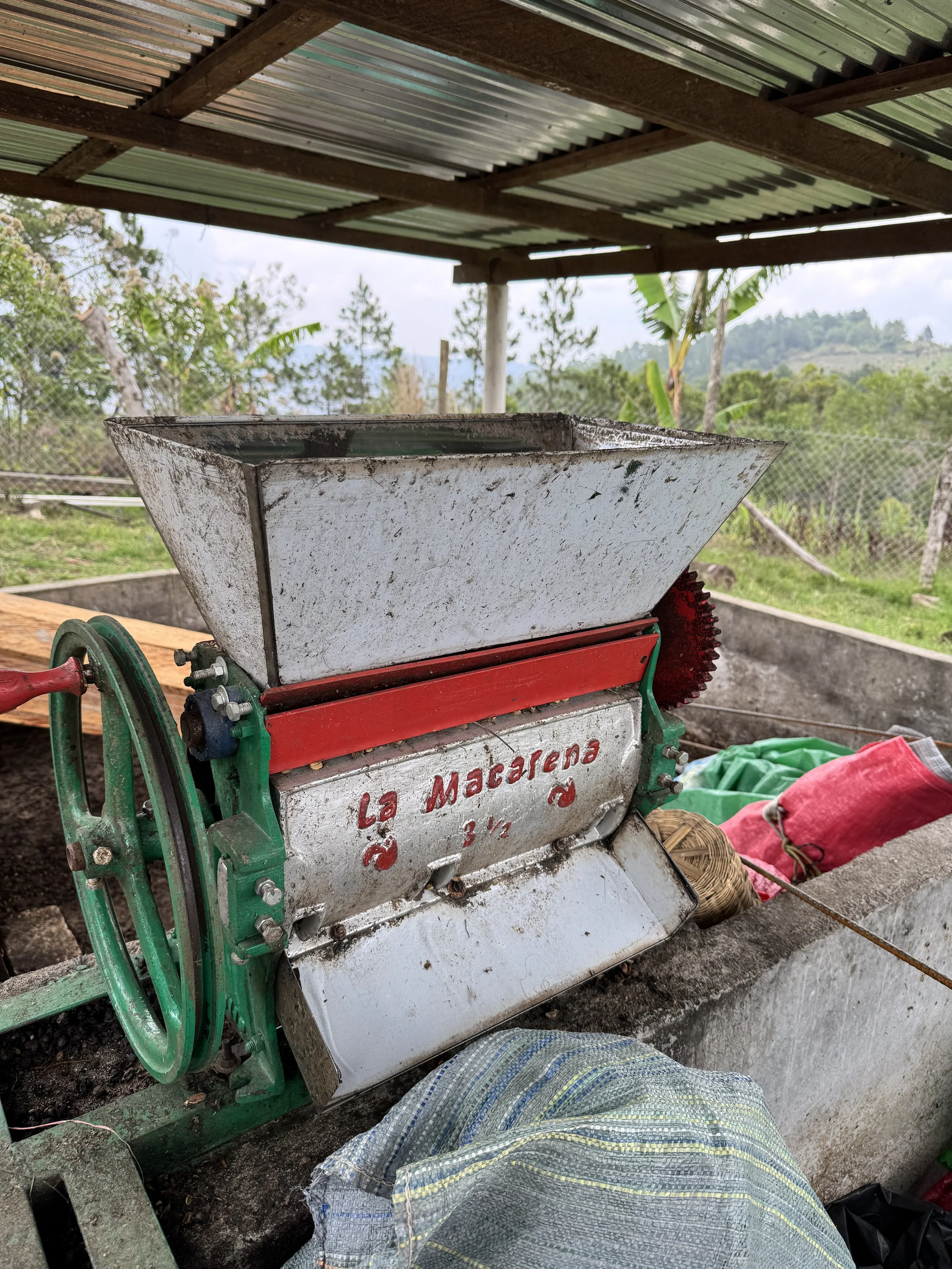
In the afternoon, we spent time at Beneficio Rio Negro, watching coffee deliveries come in. In addition to our own farm’s coffee, we purchase cherry from small producers in the area for our regional marks La Sonrisa and Doña Isa Beneficio Rio Negro. The mill was quite busy, with plenty of coffee in every stage of the process.
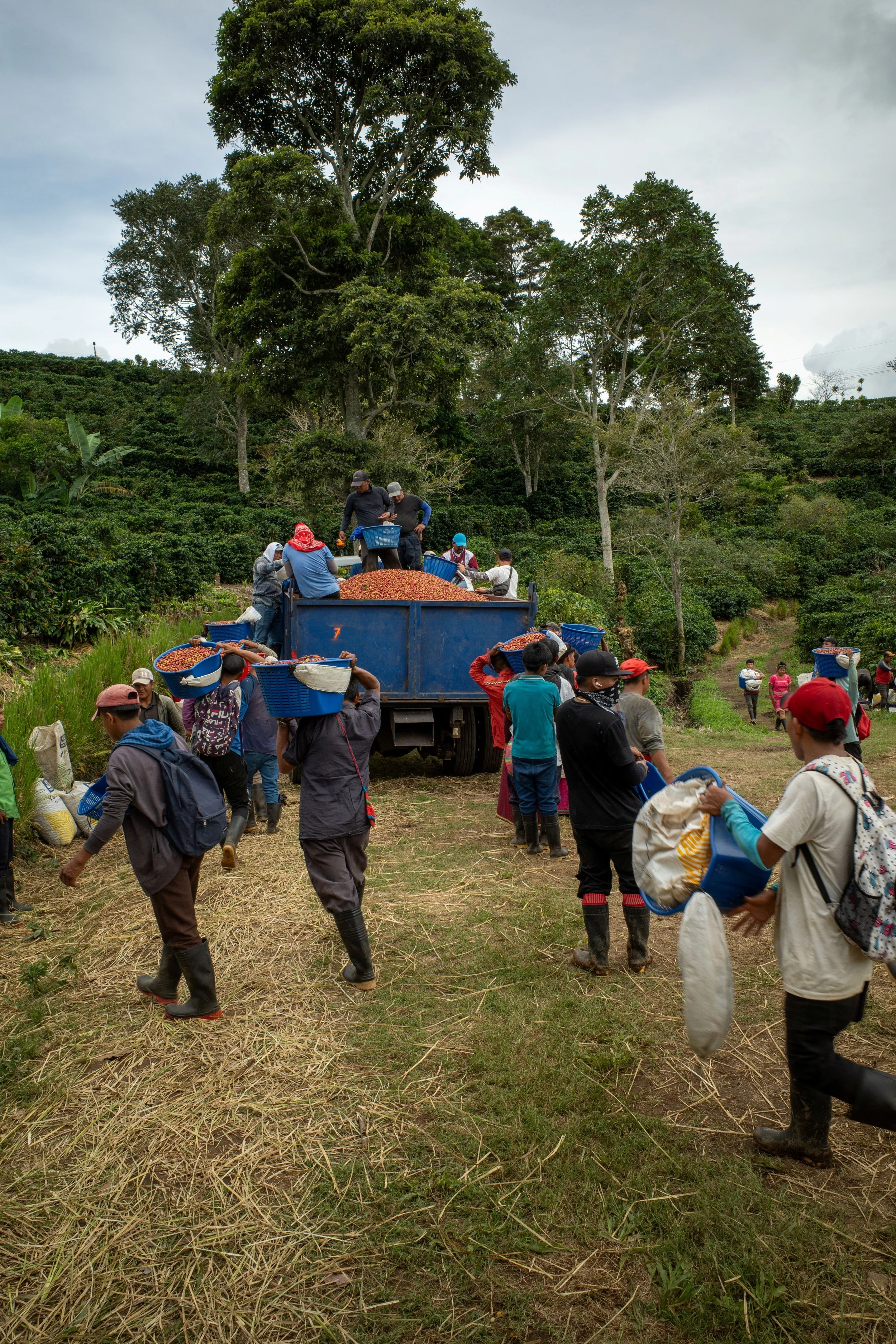
Collecting the day’s picking for delivery to the mill
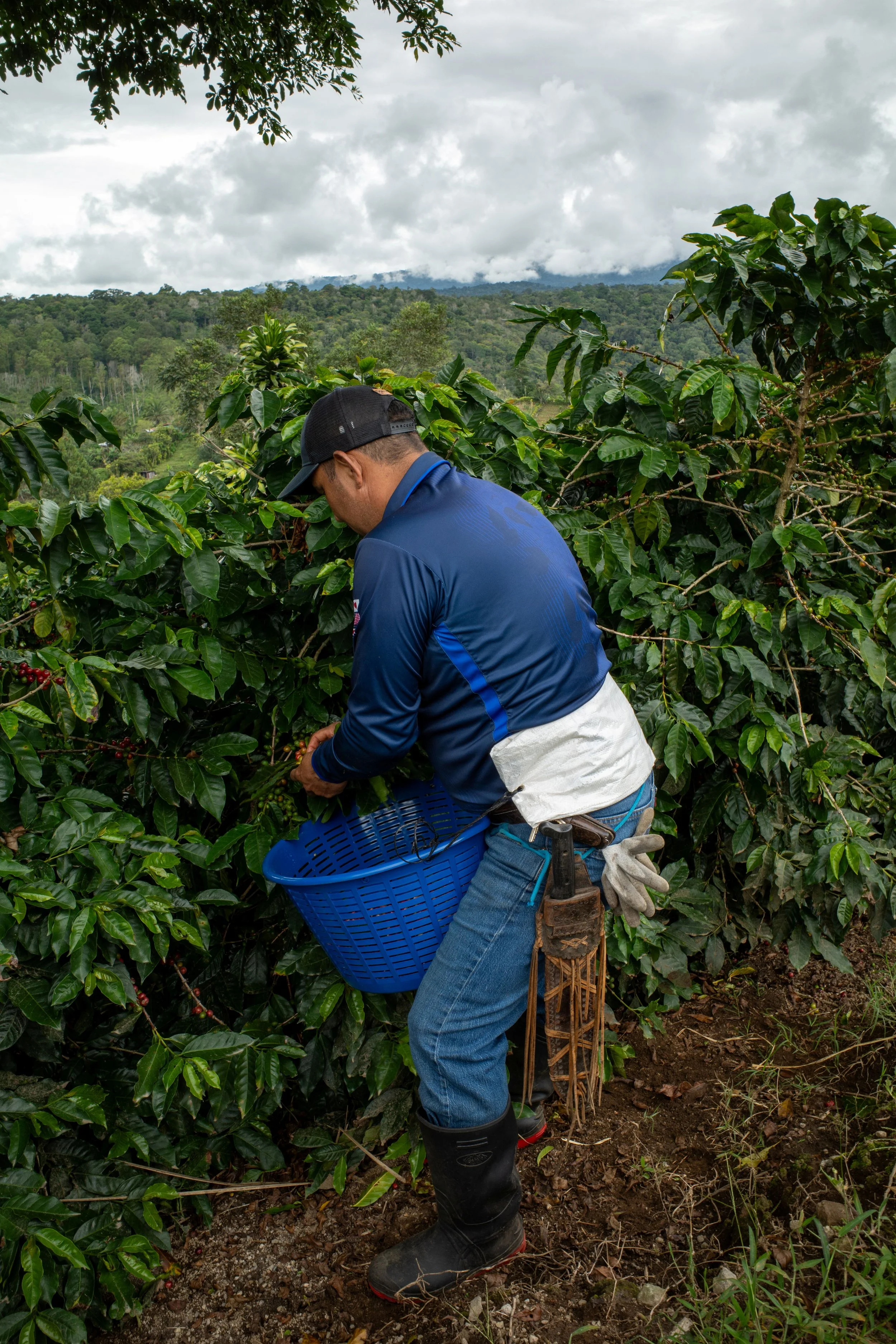
Farm manager Ronald Alfaro demonstrates picking technique
We started the next day off with a hike through some of the farm’s forest preserve, which covers 815 of the farm’s 1,813 acres. This preserved land is a big part of our farm’s Rainforest Alliance certification as well as our recognition as carbon neutral by Costa Rica’s Ministry of Environment and Energy. It was an active day for wildlife, and we were especially thrilled to spot a group of white-faced capuchins jumping through the treetops above us.
After our hike, we went back to the mill for a cupping. We were able to enjoy some of the first samples from the new harvest, which were already tasting excellent despite their freshness. Our team has invested a lot of time and resources into Rio Negro in recent years, and I believe that is reflected in the coffee, which just keeps getting better.
We ended the day with a barbecue dinner and a relaxing evening at the house. The next morning, we headed back to San José, this time taking the scenic route along the Pacific coastline. It was great to visit Rio Negro again, and I left feeling excited about the coffees we’ll be able to share from this region in just a few months. With 2027 just around the corner, it’s a great time to start booking your Costa Rica needs for the new crop. If you’re interested in coffee from Rio Negro or any of our other offerings from Costa Rica, reach out to your salesperson or contact us via the form on our website and we’ll be happy to help!
Report by Tucker Francis, Green Coffee Manager
New Honduras Arrivals
In our June newsletter, we shared a report from a recent trip to Honduras. We are glad to share that the coffees selected on that trip have now arrived and are available at CTI NJ.
We have two larger lots available — a washed Catuai-Obata from Ayala Coffee and a washed Catuai from Familia Maldonado — plus a few exceptional washed microlots that would be a welcome addition to your featured coffees list this season.
If you’re interested in any these coffees, reach out to your salesperson and we’ll be happy to help with more information and samples.
AVAILABLE NOW
COSTA RICA, HACIENDA LA MINITA, EL MELICO SEMI-WASHED GEISHA
We have been cultivating the famed Geisha variety in La Minita’s El Melico lot for quite some time, and this year’s crop may be the best yet.
The Semi-Washed process is a method developed by our team at Beneficio Rio Tarrazu in which the coffee is fermented in-cherry for 24 hours, depulped, fermented for 24 hours in fermentation tanks, then moved to raised beds. On the raised beds, the coffee is washed manually to remove approximately 50% of the mucilage before being sun-dried.
Availability: CTI NJ
Certifications: N/A
Cupping notes: Lemongrass, orange blossom, honey, lime
GUATEMALA, FINCA CONCEPCIÓN BUENA VISTA WASHED CATURRA
We have been importing coffee from David and Eddy Solano of Concepción Buena Vista for a couple of years now, but this is the first time we’ve been able to feature their excellent coffee on our spot list. This washed 100% Caturra lot is sweet and balanced — the kind of coffee you want to drink all day.
Availability: CTI NJ
Certifications: N/A
Cupping notes: Citrus, toasted nuts, chocolate
That’s all for this month’s edition. Thanks for reading, and as always, if there’s anything we can do for you, reach out to your salesperson or fill out our contact form and we’ll get right back to you. See you next month!